10 Minute Morning Mobility Flow for Energy: A Qigong-Inspired Routine
I Do This Every Morning to Wake Up And Unlock Endless Energy
If you wake up already stressed, with your mind racing and your shoulders up by your ears, this is for you.
This is the 10 minute qigong inspired movement flow I’ve incorporated into my morning routine to wake up and energize my body.
You can also follow it to shake off any stress throughout the day.
No equipment, no experience needed.
Advertisement
Just hit play on today’s episode of Live Lean TV, and follow along with me.
While we move, I’ll break down what qigong actually is and why it works.
In the evening, I use this Nuropod vagus nerve stimulator device to regulate my nervous system to wind down before.
I’ll show you once we finish the workout.
Let’s start moving with body bounces.
Qigong Exercise #1: Body Bounces
Body bounces help release tension through your traps and neck and loosens your calves, knees and hips.
To get started:
- Plant your feet into the ground, with your knees soft.
- Start a small bounce from your knees.
- If you have sore knees, keep your heels down, and just gently bend and extend at the knees.
- Let your arms hang completely loose by your sides.
- Let your shoulders rise as your bounce up and fall as you drop back to the ground.
- Inhale as you rise, quick exhale as you land.
- Your arms should just jiggle and hang by your sides.
- Repeat for 60 seconds.
So what is qigong?
Two words.
Qi means energy, or life force.
Gong means skill, or work.
So qigong is basically energy work: simple, repeatable movements paired with your breath.
This flow is qigong-inspired: the shaking, swinging and tapping come from traditional qigong, mixed with modern mobility moves in the same loose style.
Loose body, breath synced to the movement, focus on what you’re doing.
That’s the whole point.
Next up are march knee slaps.
Qigong Exercise #2: March Knee Slaps
March knee slaps are a movement that warms up your hip flexors, core and shoulders, and gently raises your heart rate.
It’s a simple way to wake up your balance and your focus at the same time.
Crossing your hands over the middle of your body, while alternating legs, makes both sides work together.
To get started:
- Stand tall, feet hip-width apart.
- March in place, lifting one knee at a time up to hip height.
- As your knee comes up, slap it lightly with both hands together.
- Under control lower your foot and repeat with the other knee.
- Inhale as one knee lifts, exhale as your other knee lifts.
- Keep it easy and find a steady rhythm as you keep breathing.
- Continue alternating sides for 60 seconds.
Next up, drop down arms.
Qigong Exercise #3: Drop Down Arms
Drop down arms mobilizes your shoulders and releases tension in your traps, upper back and arms.
To get started:
- Stand tall with your feet hip-width apart, knees soft.
- Inhale as you quickly lift your arms up.
- Them let your arms drop, heavy, with a quick exhale.
- Dip your knees as your arms fall.
- Repeat in a steady rhythm.
Notice the pattern.
Inhale is energy, exhale is release.
Your breath is one of the only parts of your nervous system you can control directly.
Right now we’re using quick, focused breaths to shake off tension.
At the end of the workout, I’ll slow you how I slow down and regulate my nervous system before bed.
Advertisement
That’s when your body gets the signal it’s safe to calm down.
Next, alternate arm swings.
Qigong Exercise #4: Alternate Arm Swings
Alternate arms swings open up your shoulder joints and chest, and loosens your upper back and lats.
To get started:
- Stand tall with soft knees.
- Swing one arm forward and up as the other swings back.
- Keep your arms relaxed and let momentum do the work.
- Add a small knee dip with each swing.
- Inhale on one arm swing, exhale on the next.
Qigong goes back thousands of years in China.
It comes from the same roots as Traditional Chinese Medicine.
Millions of people still practice it every day, often in parks, first thing in the morning.
This is exactly what we’re doing right now.
Next up, it’s time to twist the body with full body twists.
Qigong Exercise #5: Full Body Twists: High, Middle, Low
The full body twist mobilizes your spine and loosens your obliques, lower back and hips.
This is important because your spine is built to rotate.
But most of us sit all day at a desk, in the car, or on the couch, facing one direction.
Then stress tightens everything up even more.
These loose twists get your spine moving again without forcing it.
To get started:
- Stand tall with your feet a little wider than your hips, knees soft.
- Turn side to side and let your arms whip around loosely.
- Let your back heel pivot as you turn.
- Quick exhale each time your hands tap, inhale as you turn back through the middle.
- Start with the high twist by letting your hands whip around high and tapping the back of your shoulders.
- Then transition to the middle twist by letting your hands whip around and tapping the back of your ribs and lower back.
- Then transition to the low twist by letting your hands whip around and tapping your hips and thighs.
- Repeat the high, middle, and low twist for 60 seconds.
Next up, trunk twists.
Qigong Exercise #6: Trunk Twists
Trunk Twists builds rotation through your mid-back and works your obliques and core.
To get started:
- Stand with your feet approximately hip width apart.
- Make a fist with one hand then place the other hand over the fist or place your hands on your elbows.
- Bend over keeping your hips facing forward.
- Then under control twist from side to side through your upper back, while keeping your hips still.
- Exhale as you rotate to one side, inhale as you rotate to the other side.
- Repeat for 60 seconds.
If you wondering what’s the difference between qigong and tai chi?
Tai chi is a martial art, with long, choreographed sequences that can take months to learn.
Qigong is simpler: short, repeatable movements focused on breath and health.
You can learn it in one session, like you are right now.
Now it’s time to open up the chest with heart openers.
Qigong Exercise #7: Heart Openers
Heart openers stretches your chest and front shoulders, and works your upper back to undo that hunched desk posture.
If you sit at a computer or look at your phone a lot, your chest gets tight and your shoulders roll forward.
That’s the posture of stress: closed off and braced.
Opening up the chest is how you undo it.
To get started:
- Stand tall, with your arms at your sides.
- Inhale as you sweep your arms wide and lift your chest.
- Exhale as you round your upper back as you bring your arms in front of you, like you’re hugging a tree.
- Continue to open and close your arms and chest in a steady rhythm.
- Repeat for 60 seconds.
Now let’s move on to golf swings.
Qigong Exercise #8: Golf Swings
Golf swings trains rotation through your hips, obliques and mid-back, the same chain you use to swing, throw or turn.
Rotation is one of the first things we lose as we get older.
Turning to look behind you when you back up the car.
Picking up your kids.
Swinging an actual golf club.
If you don’t use it, you lose it.
A couple of minutes a day keeps it.
To get started:
- Stand tall with your feet just outside hip width with your arms loose down by your sides.
- Swing and twist your body to one side as if you’re mimicking the back swing of a golf swing, with your back heel pivoting.
- Under control, rotate through your hips and follow through to the other side, with your arms flowing freely, to complete the golf swing, as you let you back heel pivot.
- Think smooth and free, not powerful.
- Inhale on the backswing, exhale as you swing through.
- Continue alternating sides for 60 seconds.
Next up, body waves.
Qigong Exercise #9: Body Waves
Body waves move your whole spine and works your core, hips and glutes.
To get started:
- Stand with with your feet planted into the ground at hip width, with knees slightly bent, and core strong.
- Raise both hands above your head, then quickly lower them back down to your sides as you hinge forward at the hips.
- Let your arms float up and down in a smooth and controlled motion.
- Inhale as you extend up, exhale as you sink back down.
- Repeat for 60 seconds.
Your nervous system has two main modes:
- Fight-or-flight is your stress mode.
- Rest-and-digest is your recovery mode.
The problem is most of us stay in fight-or-flight all day and never switch back.
Rhythmic movement like this is one way to burn off that stress energy instead of sitting in it.
Last movement, the twisting body bounce.
Qigong Exercise #10: Body Bounce Trunk Twists
The twisting body bounce is a similar movement as the regular body bounce, however we’re adding a gentle side to side hip twist as you bounce.
To get started:
- Plant your feet into the ground, with your knees soft.
- Let your arms hang completely loose by your sides.
- Twist your hips and feet to one side as your bounce up and fall back to the ground.
- Inhale as you rise, quick exhale as you land.
- Your arms should flow with the side to side twist as they hang in front of your body.
- Repeat for 60 seconds.
Here’s something most people don’t know.
Your lymphatic system, which moves fluid around your body, doesn’t have a pump like your heart does.
It relies on movement and breathing to keep things flowing.
So gentle, rhythmic movement like this helps keep things moving.
Amazing Job!
That’s it.
Ten minutes.
You just gave yourself a reset.
So that’s how I wake up and energize my body in the morning.
In the evening, I do the opposite: I wind down using today’s sponsor Nuropod.
Here’s Exactly How I Use Nuropod To Manage My Stress
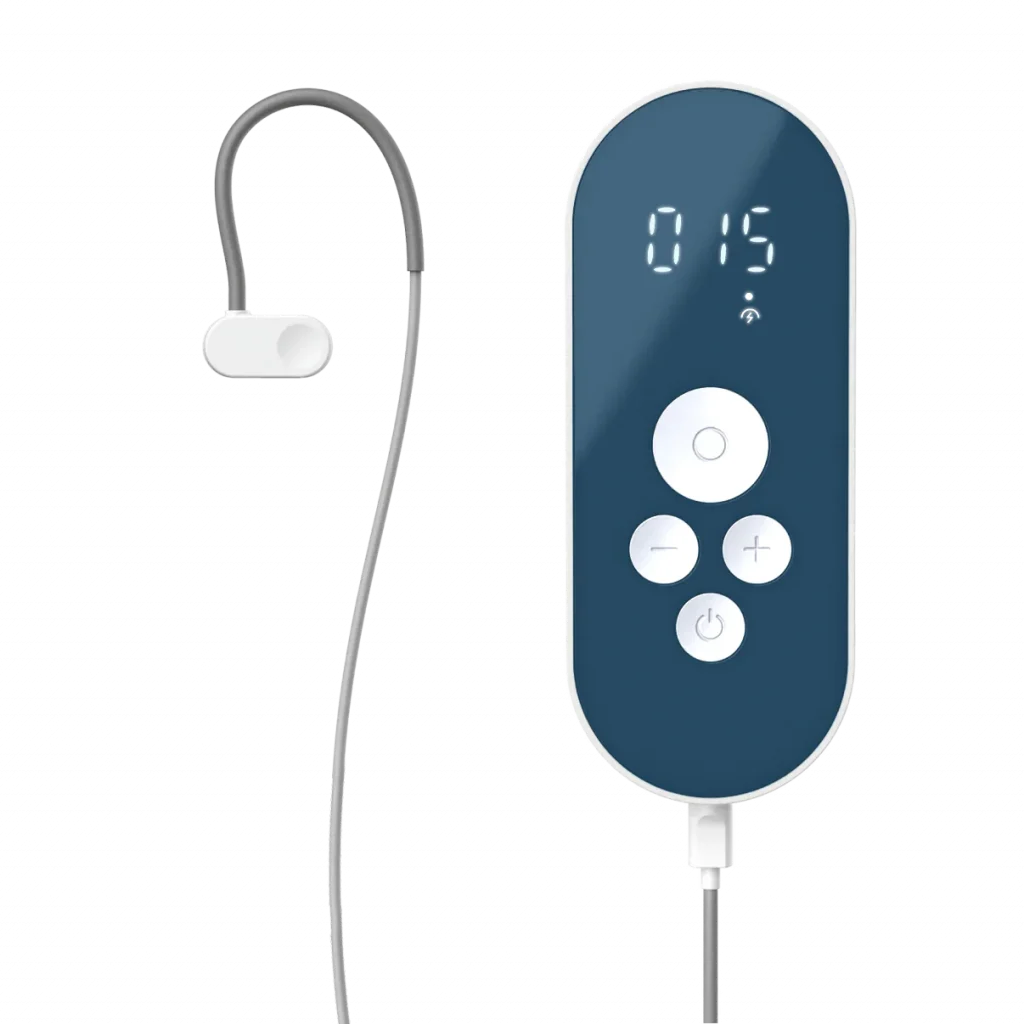
I’ve been using Nuropod consistently for over a year to help me manage stress.
Your vagus nerve is the body’s main switch back to rest mode.
A branch of it sits right under the skin here, on the ear.
Nuropod clips onto my left ear and sends gentle signals to that nerve, helping my body activate its own calming response.
It’s non-invasive, no needles, and I use it for 30 minutes after my workout and 30 minutes before bed.
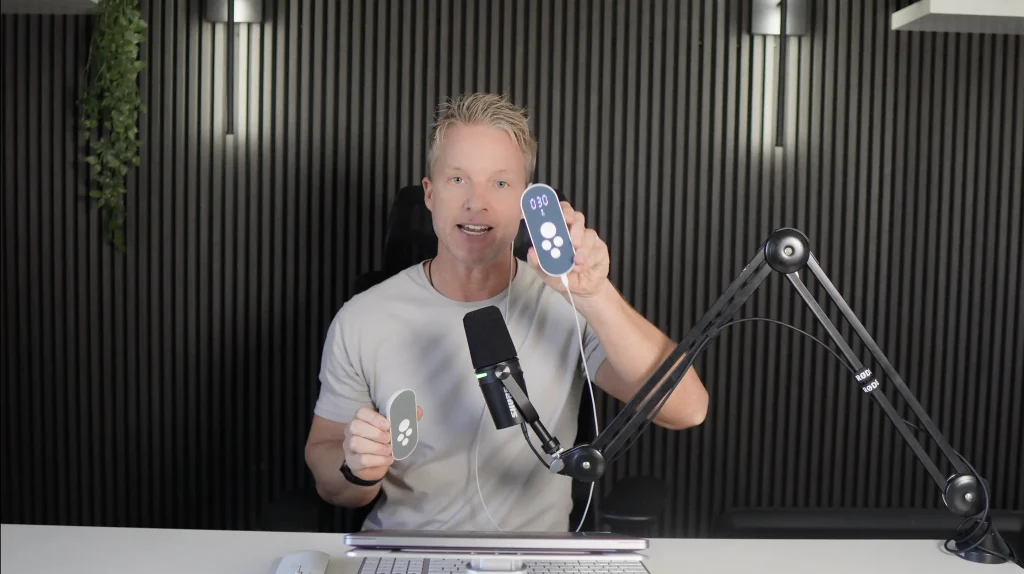
Here’s how simple Nuropod is to use:
- First, I wet my left tragus with a little water to help the signal connect.
- Then I clip the earpiece onto my left tragus and run the wire behind my ear.
- Power it on.
- Set the session time.
- Then turn up the energy level until you feel a gentle, comfortable pulse.
Now you’re stimulating the vagus nerve to enter rest and relax mode.
This is one of my favorite calming 30 minutes of the day.
I simply put on my Nuropod when I put the kids to bed, when I do my nightly visualization, or when I’m reading or watching TV, to help regulate my nervous system before bed.
I also use it after my workouts as part of my recovery routine.
Training is stress on the body too, and this is how I help my body shift back into recovery mode.
Since I started using it over a year ago, my anxious thoughts have decreased, and my HRV scores, which is a sign of recovery has been at it’s all time high.
If you want to see where your stress is at Nuropod has a free 5-minute Nervous System Stress Score.
You can find it through this link and unlock up to 15% off Nuropod.
Make sure you click the social media buttons to share this with your friends and come back to this 10 minute qigong inspired movement flow video and do it again tomorrow morning.
Ten minutes is all it takes.
Drop a comment and tell me which move felt best and subscribe to my YouTube channel for more tips to Live Lean 365 days a year.
Now I want you to go try this 10 minute jump rope workout for beginners.
Keep Living Lean.
BROWSE MORE EXERCISES TO LIVE LEAN!

Brad Gouthro is the founder of Live Lean TV, a media company focused on helping men and women “Live Lean” 365 days a year. Brad’s programs and content have helped millions of people all over the world learn how to get in shape, and more importantly, sustain it for life.