How to Fix Your Sleep: 5 Mistakes Killing Your Recovery (And How to Fix Them)
Listen to the post, Fix Your Sleep: The 5 Mistakes Wrecking Your Recovery, on our Live Lean TV Podcast. Don’t forget to subscribe to the podcast!
The 5 Sleep Mistakes Quietly Wrecking Your Recovery
If you’re training hard, eating right, and still waking up exhausted, the problem isn’t your effort.
It’s the sleep mistakes you don’t even know you’re making.
I thought I needed more sleep.
Advertisement
Turns out I needed better sleep.
And once I fixed the mistakes quietly wrecking it, everything changed, including my energy, my recovery, my focus, even my mood.
I’ve covered the habits that ruin your sleep before, but today I’m going deeper into the fixes.
On today’s episode of Live Lean TV, I’m breaking down the mistakes killing your sleep and exactly how to fix each one.
And stick around, because one of these is so backwards that most people do the exact opposite and fixing it made the single biggest difference for me.
I’ve timestamped every section in the table of contents below so you can jump around.
Table Of Contents – Jump To Links
- How To Build Sleep Pressure
- Your Afternoon Coffee Is Ruining Sleep
- Do This at Sunrise to Sleep Better
- Your Afternoon Nap Is Ruining Sleep
- How to Shut Off a Racing Mind at Night
- Your Sleep Tracker May Be Hurting Sleep
- Are You a Morning Person or Night Owl
- Can't Sleep? Do This, Not That
- Sedation Isn't Sleep: Alcohol & Sleeping Pills
Let’s get into it.
How To Build Sleep Pressure
There’s a hidden force that decides whether you crash the second your head hits the pillow or lie there wide awake for an hour.
It’s called sleep pressure, and once you understand it, you can control it.
Sleep pressure is simply your body’s building drive to sleep.
The longer you’re awake, the more it builds.
And the whole game is cultivating it in the right amount, at the right time.
Not too much, not too little, not too soon.
Here’s proof of how powerful it is.
One of the main techniques doctors use to treat insomnia is actually sleep restriction.
They do this by cutting a patient’s time in bed down to six hours or less.
Sounds backwards, right?
But it works because it increases sleep pressure.
It makes them tired enough that they fall asleep more easily, since their sleep pressure builds up until it overwhelms whatever was causing the insomnia, and their normal sleep cycle gets restored.
Your Afternoon Coffee Is Ruining Sleep
That afternoon coffee you swear “doesn’t affect you”?
It’s still in your system when your head hits the pillow, and it’s blocking you from real sleep.
Here’s how it actually works.
All day long, a chemical called adenosine builds up in your brain and creates your drive to sleep.
Caffeine blocks the receptor that adenosine plugs into, so even when your body is tired and begging for rest, caffeine stops your brain from getting the message.
And it lingers way longer than you think.
Caffeine has a half-life of up to six hours.
So that coffee at noon?
Half of it is still circulating at 6pm.
Advertisement
Drink a double espresso at 3pm and you’ve still got a full shot’s worth in your system at 9pm.
This could be quietly delaying your ability to fall asleep.
Now, we’re not all wired the same.
Your caffeine tolerance is partly genetic.
If you’re a fast metabolizer like my wife Jess, you might handle an afternoon cup just fine.
But if you’re a slow metabolizer and you’re struggling to fall asleep, your afternoon coffee is a prime suspect.
Do This at Sunrise to Sleep Better
Want to fall asleep faster tonight?
It starts the moment you wake up.
Exercise is one of the best ways to build sleep pressure.
Even a 30-minute Zone 2 session can do wonders for how fast you fall asleep.
Just don’t do it within two to three hours of bed, or it’ll backfire as blue light late in the evening can interfere with sleep.
And if you can get that movement outdoors, even better.
A half-hour dose of strong morning daylight anchors your circadian rhythm and sets up your body’s sleep timing for that night.
Your Afternoon Nap Is Ruining Sleep
Here’s the first one that’s going to sound completely wrong: your afternoon nap might be the exact reason you can’t sleep at night.
I know, naps feel amazing.
But remember sleep pressure?
A nap bleeds it right off.
You spend all day building that drive to sleep, then a long afternoon nap dumps it.
So you may feel great at 3pm, but then you’re wondering why you stuck wide awake staring at the ceiling at 11 PM.
If you’re struggling with nighttime sleep, cutting the nap is one of the fastest fixes there is.
Tag someone who naps every afternoon and then complains they can’t sleep.
They need to hear this.
How to Shut Off a Racing Mind at Night
Your body can be completely exhausted, but if your mind is still racing, you’re not falling asleep.
That’s why you need to mentally prepare your body for sleep by actively winding down and destressing before bed.
This includes avoiding anything that triggers stress or anxiety before bed, including work emails, the news, or social media, flips on your sympathetic nervous system.
That’s fight-or-flight, the exact opposite of what you need.
So shut the laptop down in the evening.
If there’s a problem you can’t stop thinking about, write a few lines about it and make a plan for the morning to get it out of your head.
Following guided meditations before bed can also help dial down that stress response.
And this is exactly where today’s sponsor Nuropod comes in.
If you’re wired but tired, lying in bed exhausted with a mind that won’t shut off, that’s not a willpower problem.
That’s a nervous system problem.
You spend all day in fight-or-flight — work, stress, kids, training.
Then you lie down and expect your body to instantly flip into rest mode.
But a nervous system stuck in fight-or-flight doesn’t switch off that easily.
It hasn’t gotten the signal that it’s safe to rest.
Nuropod supports your vagus nerve, which is the pathway that helps lower cortisol and shift your body out of fight-or-flight and into rest-and-digest.
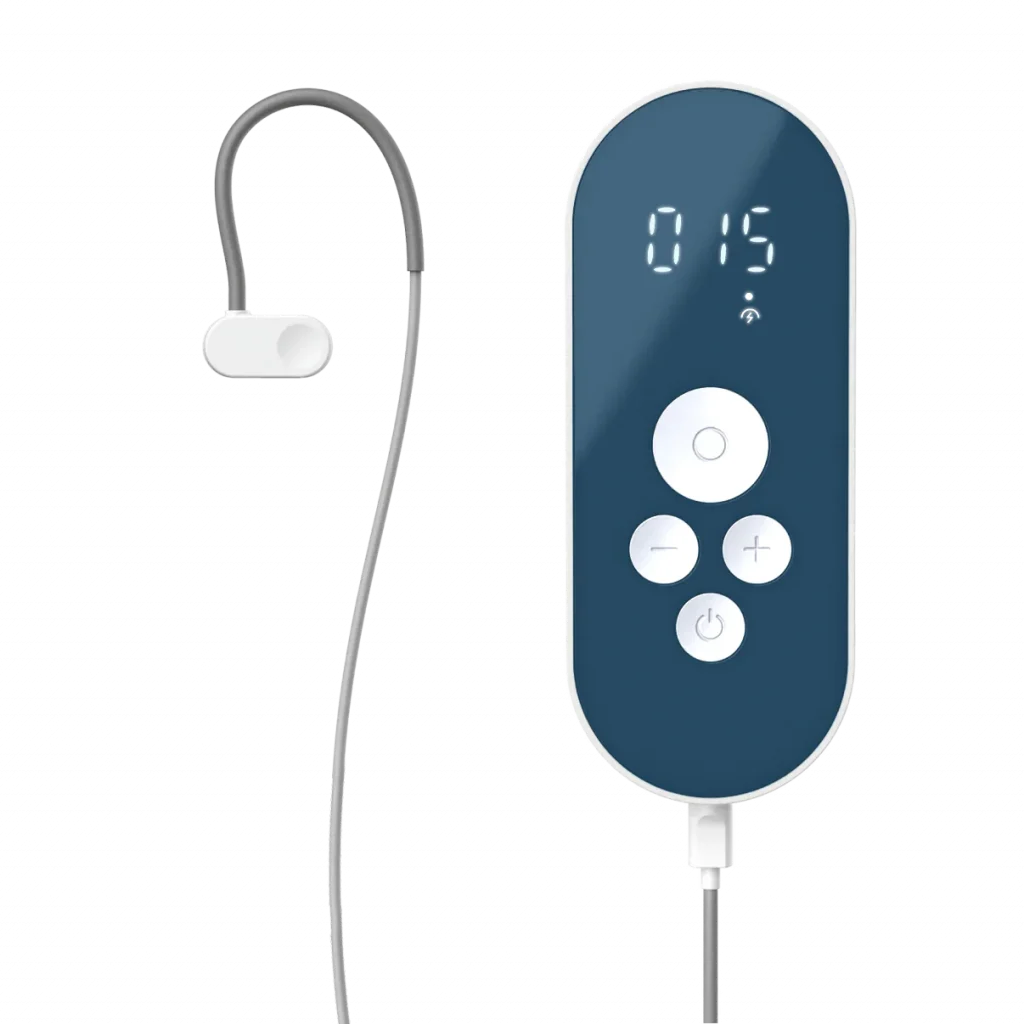
It uses gentle vagus nerve stimulation through the left ear, and it’s backed by serious science including over 60 clinical studies, with research from institutions like Harvard and UCLA, showing it’s clinically shown to improve HRV and sleep quality.
I use it for about 30 minutes as part of my evening wind-down.
Personally, I’ve been using it everyday for over 9 months, and my HRV has climbed from 51 to an average of 88 this past month.
And more importantly, those racing late-night thoughts have calmed down a lot.
Of course, individual results vary, but for me it’s been a game-changer.
If your mind won’t shut off at night, take your nervous system back into your own hands.
Use my exclusive link for up to 15% off (discount code auto applied at checkout).
Your Sleep Tracker May Be Hurting Sleep
Your sleep tracker might actually be making your sleep worse.
I like using sleep trackers, like the Oura Ring and my Apple Watch, as they are reasonably accurate in letting you know how well you’re actually sleeping.
They do this by measuring heart rate, HRV, movement, and breathing rate to estimate your sleep stages and sleep duration.
That data can be genuinely useful, but here’s the trap.
If you check your score the next morning, and it stresses you out, that anxiety may impair the very sleep you’re trying to measure the next night.
To overcome this, I like to primarily focus on how my daily scores are trending over time.
But if your sleep score continues to make you anxious, take the tracker off.
Are You a Morning Person or Night Owl
Some people are genetically wired to wake up early, while others to stay up and wake up late.
These people are not lazy, they just have a different chronotype.
This is a fancy word to describe if you are genetically predisposed to jump out of bed in the morning (i.e. a morning person) or you tend to walk up later (i.e. a late night person).
Knowing yours helps you stop fighting your own biology.
If you want to find out whether you’re naturally a morning person or a night owl, you can take the Morningness-Eveningness Questionnaire (MEQ).
My Oura Ring uses my body temperature, sleep-wake cycle, and physical activity to confirm that my choronotype is a Morning Type.
This recommends my optimal sleep schedule is asleep at 10:04pm and awake at 6:04am.
Drop a comment right now, are you a morning person or a night owl?
I’m genuinely curious to see how the Live Lean Nation splits on this one.
Can’t Sleep? Do This, Not That
If you’re lying in bed wide awake, the worst thing you can do is stay there.
Don’t fight it.
Get up, go into another room, and do something relaxing but boring.
Drinking a cup of non-caffeinated tea and a dull book work great.
The key is that it serves no purpose.
Never give your insomnia a job to do, like catching up on work, because if you do, your brain learns to wake you up for it every single night.
Only go back to bed when you feel sleepy again.
Sedation Isn’t Sleep: Alcohol & Sleeping Pills
That glass of wine or Ambien that helps you fall asleep?
It’s the exact thing wrecking your sleep a few hours later.
Here’s the trap.
Alcohol and sleeping pills are a sedative, so it knocks you out faster, but once your body starts metabolizing it, it turns from friend to foe.
It blocks you from entering REM and leaves you stuck in light, broken sleep, waking up over and over through the second half of the night.
So you technically slept, but you wake up feeling like garbage.
And this isn’t just heavy drinkers, the hit to memory and cognition shows up even in moderate drinkers.
So if you drink, the science is clear: cap it at no more than two drinks, and finish your last one at least three to four hours before bed.
The further from bedtime, the better.
It’s honestly one of the reasons I quit alcohol over two years ago.
And something like Ambien doesn’t give you real, restorative sleep; it actually decreases deep sleep.
If you want a natural option, ashwagandha has solid research for improving sleep quality without the next-day fog.
And there it is, your complete sleep protocol.
Here’s the truth though: you don’t need to do all of this tonight.
Pick two or three that hit home and start there.
Small changes stack up fast when it comes to your sleep.
And if your mind won’t shut off at night, go check out Nuropod using this discount link.
Discount code is automatically activated at checkout when using the link above.
If you haven’t checked my video on Why Poor Sleep is Destroying Your Body, that’s your next stop.
Thanks for watching, and keep Living Lean.
BROWSE MORE EXERCISES TO LIVE LEAN!

Brad Gouthro is the founder of Live Lean TV, a media company focused on helping men and women “Live Lean” 365 days a year. Brad’s programs and content have helped millions of people all over the world learn how to get in shape, and more importantly, sustain it for life.