Intake Breathing Honest Review: 2-Month Results
Listen to the post, Intake Breathing Review: Does a Nasal Strip Actually Improve Sleep and Performance?, on our Live Lean TV Podcast. Don’t forget to subscribe to the podcast!
Intake Breathing Review: First Look
So a couple days ago I got hit with a cold.
Nothing crazy, but enough to completely stuff me up at night.
So when I heard about these nasal strips from Intake Breathing, I had to give them a try.
Advertisement
The first night I used one, I slept way better than I normally do when I’m stuffed up.
Since that worked so well, I was curious and started testing them during my Zone 2 cardio and my HIIT workouts too.
Did it help?
I’m going to share everything with you in today’s episode of Live Lean TV, including my full honest Intake Breathing review.
To be respectful of your time, I’ve included jump links to each section in the table of contents below.
Table Of Contents: Jump To Links
Let’s start with the basics.
Intake Nasal Strips: What Are They?
Intake Breathing makes a magnetic nasal strip that acts as a nasal dilator.
It sits on the outside of your nose and physically holds your nostrils open wider so you can get more air with every breath.
And the first time you put one on, you feel it immediately.
I could smell rainbows 😂.
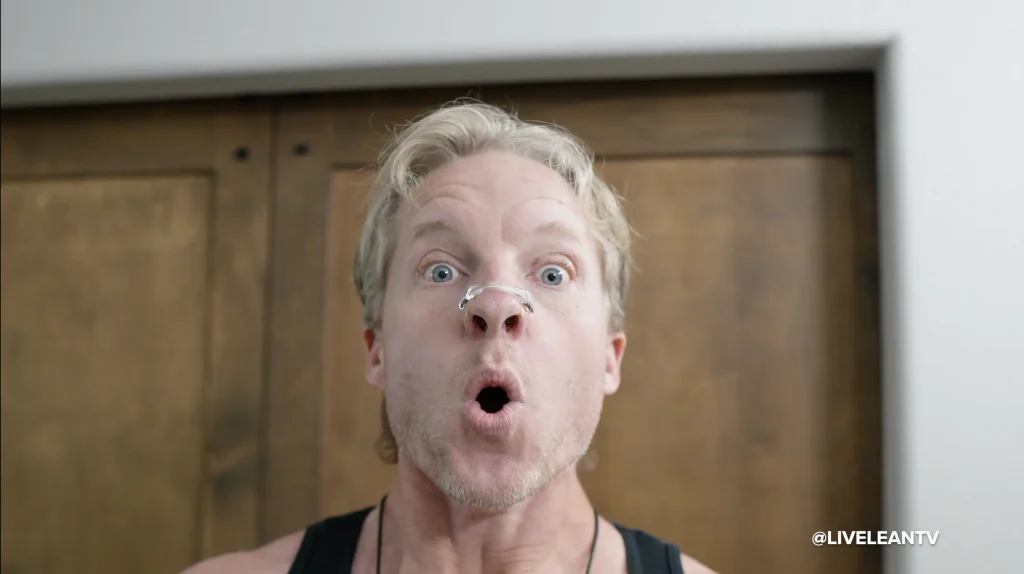
You don’t realize how restricted your breathing was until you feel the difference.
Now here’s where things got interesting.
Do They Help Lower Heart Rate in Zone 2 & HIIT?
I started using these Intake Breathing bands because of a cold, but what kept me using them had nothing to do with being sick.
Once I felt the benefits of better breathing during sleep while I was stuffed up, I got curious and started testing them during my Zone 2 cardio and HIIT workouts.
What I noticed shocked me.
I pushed just as hard as always, but my heart rate stayed lower than normal during the whole session.
And I didn’t change anything except what was on my nose.
When your lungs aren’t fighting for air, everything else gets easier.
Now let me take you back to why I started using these in the first place.
Do They Help You Sleep Better With A Cold?
If you’ve ever tried to sleep while completely stuffed up, you know how brutal that is.
That’s the reason why I started using these Intake Breathing bands.
When I’m sick with a cold, no matter how exhausted I feel, I could never get the proper sleep and recovery my body needed.
And when I finally did fall asleep, it’s only for a short light stage of sleep because I wake up in the middle of the night feeling worse than when I went to bed.
However, the first night I put an Intake Breathing band on, I slept way better than I ever had when I was sick.
Intake Breathing bands physically hold your nostrils open wider so you can get more air with every breath.
And when you’re actually breathing properly, your body can finally do what it’s supposed to do at night, recover.
And it’s not just congestion these help with.
Do They Help You Snore Less?
If your partner has ever nudged you awake at 2am, or you’re waking up with a dry mouth feeling like you barely slept, your breathing at night might be the problem.
Even though I don’t snore (confirmed by my wife 😉), I was shocked to see on Intake’s website that 88% of users of Intake reported a reduction in snoring.
Advertisement
Snoring happens when your airway gets restricted and air has to force its way through, causing that vibration and noise.
Intake Breathing bands physically hold your nostrils open wider so you get more air with every breath.
More nasal airflow means less mouth breathing, less turbulence, quieter nights, and deeper more restorative sleep.
And when you’re sleeping deeper, your body is recovering harder.
That means better training, more energy, and sharper focus the next day.
Now I want to speak to a specific group of peope for a second.
Do They Help You Breath Better With A Deviated Septum?
If you have one nostril that always feels more blocked than the other, not just when you’re sick, every single day, you might have a deviated septum and not even realize it.
A deviated septum is basically when the cartilage inside your nose sits off to one side, which restricts the airflow through one nostril so you’re constantly operating at half capacity.
I don’t have a deviated septum myself, however the consistent thing they tell me is that keeping both nostrils as open as possible, from the outside, makes a real noticeable difference, especially at night when you’re trying to get quality sleep.
Now Intake strips aren’t going in and fixing anything structurally.
But maximizing the airflow you already have is sometimes all you need.
That’s why these Intake Breathing bands are worth trying if you’re looking for a simple place to start.
Alright, so you want to try these, here’s what you need to know first.
Intake Breathing Size Guide
Most people, including myself, put these Intake Breathing bands on wrong the first time.
Here’s exactly how to get it right.
The Intake Breathing starter kit comes with the 4 most commonly worn sizes.
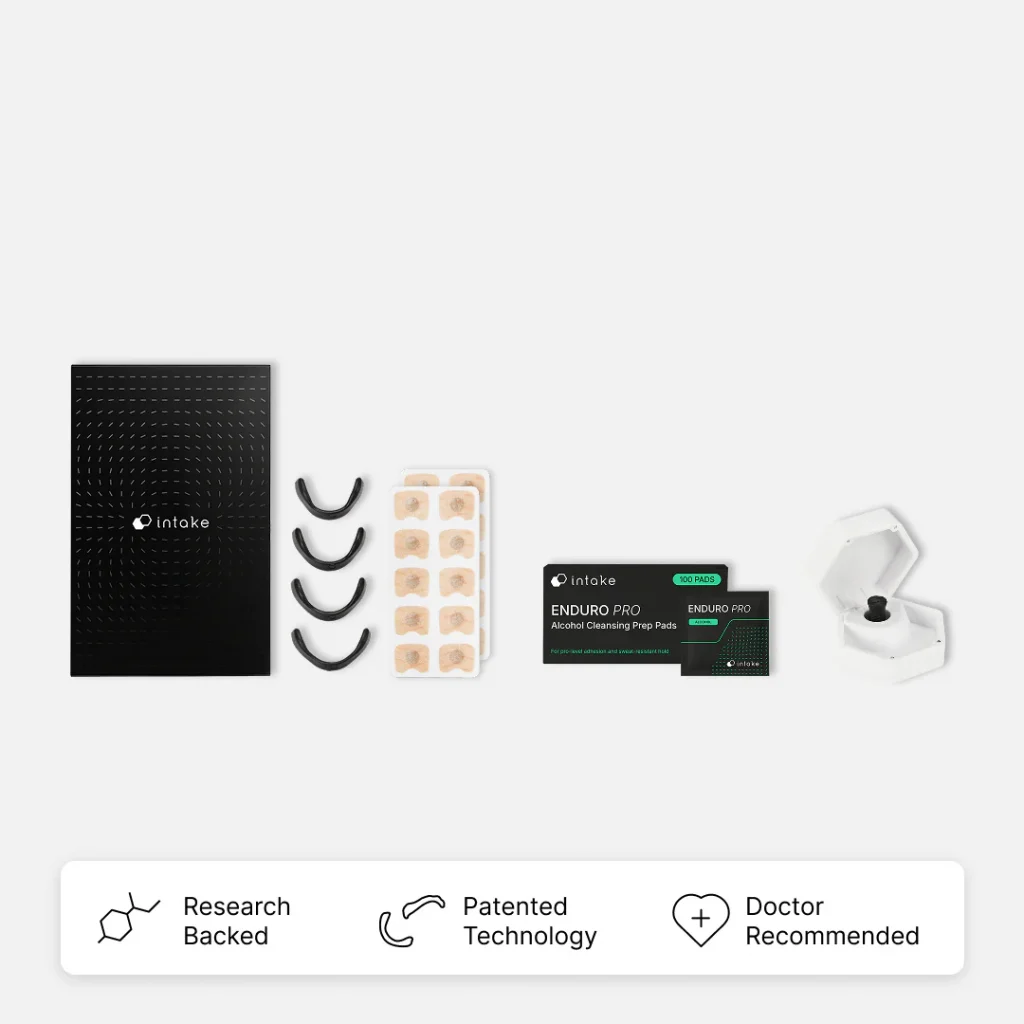
The easiest way to find the right size for you is to hold the band up to your nostrils.
The right size is the one where the inside of the band just barely touches the widest part of your nostrils.
Too small and it won’t open things up enough.
Too big and the tabs may start pulling off.
Getting the size right is the difference between feeling a little relief and feeling everything better.
Once you’ve got your size, here’s how to put them on correctly.
Intake Breathing Placement Guide
90% of people, including myself, put these Intake Breathing bands on wrong the first time.
Here’s a quick placement guide to ensure they open your nose properly:
- To ensure the tabs stick to your skin, always clean and dry your nose first.
- Place one adhesive tab on each side of your nose so the magnetic disc is just above the nostril.
- The contoured indent on the tab is positioned away from the bridge of your nose.
- Rub them in so they grip to the skin.
- For the firmest fit, wait 3-5 minutes for the adhesive to set before adding the band.
- Position the band with the shark fins pointing up and place it on your nose.
That’s it.
When it’s sitting right you genuinely forget it’s there.
And that’s when you know you’ve got it dialed in.
Here’s the discount link for 15% off automatically applied, no discount code needed.
Drop a comment below to let me know, have you tried nasal strips before and whether it is Intake or any other brand.
Tap the social media buttons to share this with your friends and subscribe to my Live Lean TV YouTube channel for new content every week.
To continue your Live Lean journey, go watch this episode on the The Best Science-Backed Sleep Products for Deeper, More Restorative Sleep.
Keep Living Lean.
BROWSE MORE EXERCISES TO LIVE LEAN!

Brad Gouthro is the founder of Live Lean TV, a media company focused on helping men and women “Live Lean” 365 days a year. Brad’s programs and content have helped millions of people all over the world learn how to get in shape, and more importantly, sustain it for life.