10 Proven Tips To Increase Deep Sleep Time At Night
Listen to the post, 10 Proven Tips To Increase Deep Sleep Time At Night, on our Live Lean TV Podcast. Don’t forget to subscribe to the podcast!
How Much Deep Sleep Do You Need At Night?
On today’s episode of Live Lean TV, I’m sharing 10 proven tips to increase deep sleep time at night.
If you’re waking up groggy, the solution may not just be to sleep more, it’s about improving the quality of your sleep.
Even though I’m getting 8 hours a sleep per night, I notice my deep sleep score is lower than I’d like, often around 30 minutes a night.
Advertisement
So I’m diving into the science and testing proven strategies to naturally boost deep sleep, not just for me, but so you can improve yours too.
To save you time, I’ve included jump links to all the questions and answers in the table of contents below.
Table Of Contents – Jump To Links
Sleep Stages: Deep Sleep vs REM vs Core Sleep
Let’s break down the 3 most common sleep stages.
All sleep stages matter, but they do different jobs.
Deep Sleep Benefits
Deep sleep, also called slow-wave sleep or stage 3 sleep, is your body’s recovery mode.
It’s where testosterone and growth hormone peak, muscle repair happens, and your immune system resets.
You’ll get most of it in the first half of the night, and it’s critical if you train hard or want to wake up feeling physically restored.
REM Sleep Benefits
REM sleep, short for rapid eye movement, is the sleep stage where increased brain activity and dreaming occurs.
Think of it as your mental reset.
It’s where memory, learning, and emotional processing happen, and it’s more dominant in the second half of the night.
If you’re chasing mental performance, creativity, or emotional balance, REM sleep is key.
Core Sleep Benefits
Core sleep is just the catch-all name for light sleep stages that bridge deep and REM.
It still matters, but deep and REM are the heavy hitters.
Deep Sleep Time
How much deep, core, and REM sleep do you need?
Most adults need 7–9 hours of sleep, but let’s break it down to see if you’re actually getting enough of each sleep stage.
Using a sleep tracking device such as an Apple Watch, Oura Ring, or WHOOP band will help you track your deep sleep, core, and REM sleep times.
Good quality sleep is usually comprised of:
- Deep Sleep: 1.5–2 hrs of deep sleep or 20–25% of overall sleep
- REM Sleep: 1-2 hours of REM sleep or 25% of overall sleep
- Core Sleep: The rest is light core sleep
However, babies and kids get the most deep sleep up to 3–4 hours.
For people over 60 year old, deep sleep drops naturally, sometimes to under 1 hour.
On average, it takes about 45 to 90 minutes after falling asleep to reach your first stage of deep sleep.
The faster you calm your nervous system before bed, the faster your brain can cycle through light sleep and hit that deep, restorative zone.
Deep Sleep Symptoms
What are the symptoms of deep sleep?
Deep sleep is when your body’s in full recovery mode.
This is when your heart rate drops, muscles go limp, breathing slows, and your brain waves go into delta mode.
Essentially you’re dead to the world, and that’s a good thing.
If you’re waking up refreshed, physically restored, and mentally clear, chances are you got solid deep sleep.
However, if you’re dragging, sore, moody, or constantly craving caffeine, your deep sleep duration was probably low.
Advertisement
Deep Sleep Music
One of the biggest challenges I’ve been working on lately is improving my deep sleep score.
Even though I get to bed on time and sleep 7-8 hours every night, the overall quality of my sleep is not optimal.
I wake up throughout the night, usually around 2 am, and still feel a little groggy in the mornings.
My Apple Watch shows I only get approximately 30 minutes of deep sleep every night.
My goal is to increase my deep sleep time so I feel more recovered the next day.
That’s where today’s sponsor, BetterSleep, comes in.
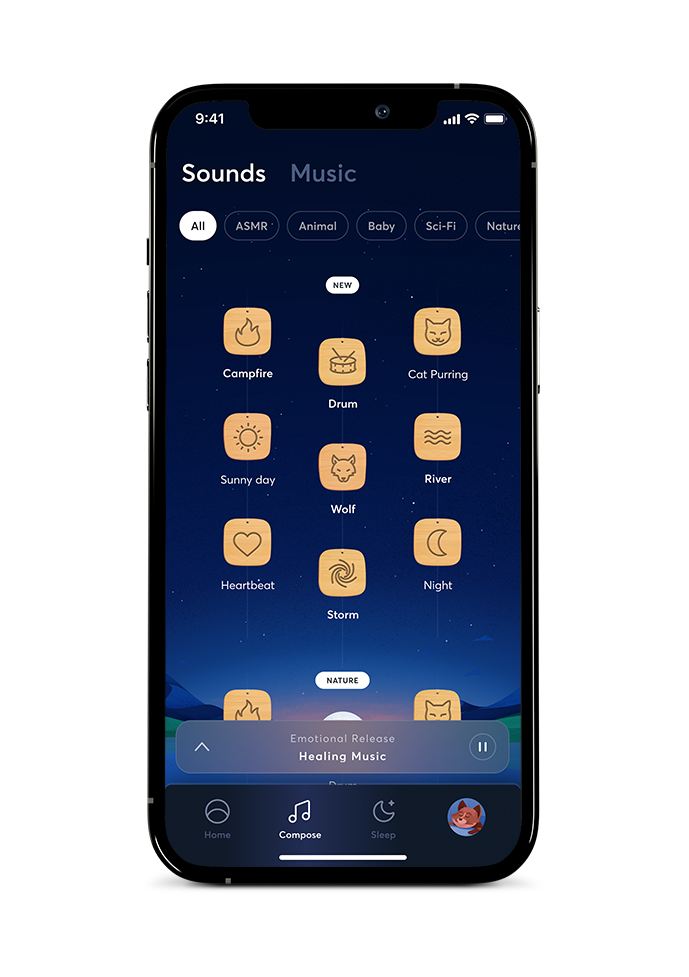
It’s one of the world’s top-rated sleep apps with over 65 million downloads — and it’s been a game-changer in my mission to improve deep sleep.
Whether I need to wind down after a long day or ease into deeper sleep stages, BetterSleep has tools that work.
My go-tos are white noise, pink noise, and water sounds like rain and ocean waves.
I also use low-frequency binaural beats in the 0.5-4 hz delta range — like “Dreamless Sleep” at 2.5 Hz and “Dreams” at 4 Hz — to help my brain sync with the same frequency that is naturally produced during slow-wave deep sleep.
The best way to listen to these binaural beats is with headphones in a quiet room so your brain can pick up the calming effects.
I’m also a fan of the “Deep Sleep Delta Waves” and “Lucid Dreaming Brainwaves” mix.
They even have guided grounding meditations to help calm your nervous system before bed and adult bedtime stories read by celebs to help you drift off.
For example, last night I listened to the ‘Deep Sleep Rain’ sleep mediation before bed, and I was honestly blown away by how grounded, relaxed, and calm I felt as I drifted off to sleep.
If you’re serious about improving your deep sleep like I am, BetterSleep is 100% worth trying.
It’s available in 10 languages on both iOS and Android — and it’s even been featured in the New York Times and Apple’s App of the Day.
Use my link: https://www.liveleantv.com/bettersleepapp to start your free trial.
Thank you to BetterSleep for sponsoring this post.
10 Best Tips To Get More Deep Sleep Naturally
If you’re only getting 30 minutes of deep sleep, even after 8 hours in bed, follow these 10 best science-backed tips to boost deep sleep:
- Get 10-15 minutes of morning sunlight into your eyes within 30-60 minutes of waking up: This locks in your circadian rhythm so your brain knows when to hit deep sleep later.
- Cut caffeine after 2 PM: Even if you fall asleep easily, caffeine can block deep sleep stages.
- Lift weights 3-5 times per week, at least 2-3 hours before bed: This gives your body a reason to recover and your brain a reason to drop into slow-wave sleep, without wrecking your central nervous system.
- Cut out alcohol at least 3-4 hours before bed: Even one drink of alcohol can disrupt your sleep cycle and reduce deep sleep by up to 40%.
- Aim to finish your last meal 2.5 to 3 hours before bed: Avoid sugar and heavy fats late at night.
- Limit drinking water 1-2 hours before bed: If you’re used to waking up in the middle of the night to pee.
- Supplement with glycine, magnesium glycinate, and ashwagandhda: 30-60 minutes before bed to lower cortisol.
- Cool your room to 65-68°F: Your core temperature has to drop for your brain to hit slow-wave sleep.
- Wear blue light blocker glasses 60-90 minutes before bed: The blue light from screens kills melatonin and delays deep sleep onset.
- Listen to binaural beats in the delta range (0.5–4 Hz) using headphones while you’re falling asleep: These low-frequency sound waves help slow your brain activity and guide it into the deep sleep zone naturally.
Bonus: go to bed and wake up at the same time daily since your brain loves routine.
Thanks again to today’s video sponsor, BetterSleep.
You can use my link https://www.liveleantv.com/bettersleepapp to try it for free to start increasing your deep sleep.
Question Of The Day
Let me know in the comments:
- How many hours of deep sleep did you get last night?
- Do you want me to create another video on the best sleep products to increase deep sleep?
If this video lit a fire under you, click the social media buttons to share it with your friends and subscribe to my Live Lean TV YouTube channel.
We’re on a mission to transform 1,000,000 lives, and I want you on the team.
New content drops every week to help you boost your energy, rebuild confidence, and Live Lean for life.
To continue your transformation, go check out this video post next where I show you How To Lower SHBG To Increase Free Testosterone Levels.
Keep Living Lean.
BROWSE MORE EXERCISES TO LIVE LEAN!

Brad Gouthro is the founder of Live Lean TV, a media company focused on helping men and women “Live Lean” 365 days a year. Brad’s programs and content have helped millions of people all over the world learn how to get in shape, and more importantly, sustain it for life.
3 responses to “10 Proven Tips To Increase Deep Sleep Time At Night”