5 Jump Rope Mistakes Beginners Make And How To Fix Them
Why Beginners Quit Jump Rope In Week 1
So you bought a jump rope, and you only lasted about a week.
By day three your shins were achy, and you couldn’t string together more than about six jumps without cracking yourself in
the ankles.
So you figured, alright:
“I’m just not coordinated.”
Advertisement
“Maybe I’m too old for this.”
Or…
“Maybe I need to get in better shape first.”
Well, guess what?
You’re wrong on all three.
Sore shins and constant tripping have nothing to do with your fitness.
That’s a rope and a technique problem, so on today’s episode of Live Lean TV, I’m going to fix both of those for you in the next 5 minutes, so keep reading.
I’ve had a jump rope in my training for years now, because honestly, it’s one of the most underrated pieces of cardio equipment out there.
You can take it essentially anywhere, and you can get amazing results in less time.
So let’s go through the five jump rope mistakes to avoid, and then stick around to the end, because I’m going to give you the exact three-week ramp-up I’d use to take you from tripping every six reps to jumping rope like an athlete.
Alright, let’s start with the one that’s causing most of your tripping, and it’s got nothing to do with you.
Jump Rope Mistake #1: Wrong Jump Rope Length
The number one reason you keep tripping on the jump rope has nothing to do with your coordination.
Your rope is just the wrong length.
When it’s too long, the jump rope is hitting the ground way out in front of you, so the arc is different on every rotation and you’re basically guessing when to jump.
And if it’s too short, you’re clipping your toes and catching yourself in the shins.
So here’s how you check if you have the correct length jump rope:
- Step one foot on the middle of the rope, and pull both handles straight up along your body.
- The end of the cable should come up to about nipple height on your chest, and the tops of the handles should land right around your armpits.
- That’s your length.
Now obviously you can’t do that test if you’re ordering your jump rope online.
So in that case, you want the total length of the jump rope to be about three feet longer than your height.
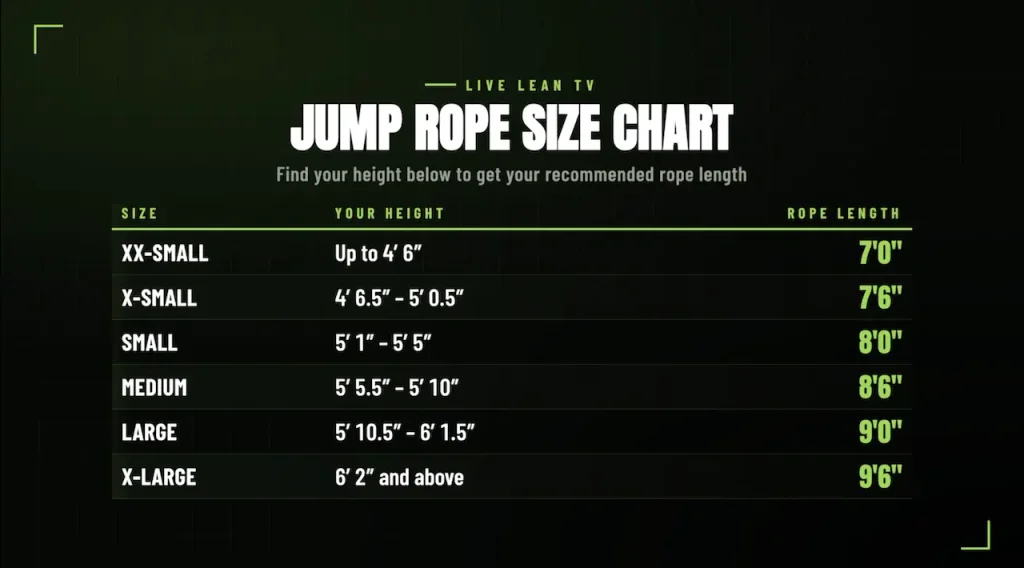
I’m six feet tall, so I’m on a nine-foot rope.
And if you’re stuck right between two sizes and you’re just starting out, go with the longer one.
That extra bit gives you some room for error while you’re still learning.
Okay, now that you have your jump rope length sorted out, let’s move on to jump rope mistake number two.
Jump Rope Mistake #2: Wrong Jump Rope For Your Level
That ten dollar speed cable jump rope you grabbed off the rack is built for somebody who already knows how to jump rope.
It spins so fast you get zero feedback from it, so you can’t feel where the rope is, which means you can’t learn the timing.
Oh, and when it hits you, it really hurts.
Then you’ve got the complete opposite, where a guy goes out and buys a two pound heavy jump rope.
Now his shoulders and forearms are cooked before he’s figured out any kind of rhythm, and he’s jumping with bad form while he’s exhausted.
Advertisement
What you actually want when you’re starting is something lightly weighted, around 1/4-1/2 a pound.
It’s heavy enough that you can feel exactly where that rope is through the whole rotation, and that feedback is how you learn the timing.
It also slows things down a bit, which buys you more margin for error.
Learn on a little weight first, then add the speed or extra weight later.
My Jump Rope Recommendation For Beginners: Crossrope Get Lean Jump Rope Set
This is exactly why I use and would recommend all serious beginners start with the Get Lean Jump Rope set from today’s sponsor, Crossrope.
The Crossrope Get Lean Set comes with two ropes, a half pound and a quarter pound rope, plus the handles.
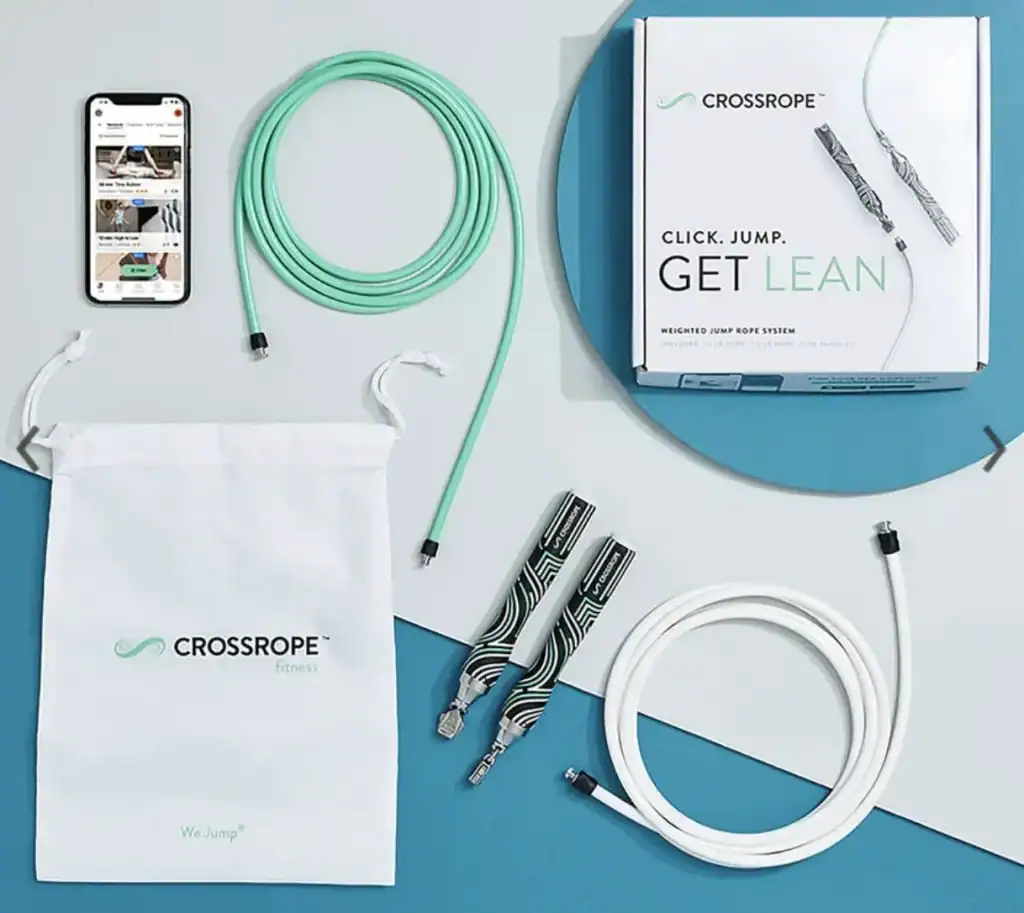
So you start learning on the half pound rope, and then once you want to open up your speed, you clip on the quarter pound rope.
It’s so easy to do, as this swap takes about two seconds.
Crossrope jump ropes are also sized to your height, so you just order your size and it shows up ready to go.
Use discount code LIVELEAN here to get 15% off.
Alright, now that your equipment is handled, let’s get into what you’re actually doing with it.
Jump Rope Mistake #3: Jumping Too High
If you’re gassed after 45 seconds of jump rope, you’re not out of shape.
You’re jumping about five inches too high.
Think about it.
Your jump rope is only about a 1/4 inch thick, so you only need about an inch of clearance.
That’s it.
One inch.
So every extra inch you’re jumping is energy you’re wasting.
Plus, it’s causing more unnecessary impact on your knees, your calves and your Achilles.
You’re not out of shape, instead of jump rope, you’re probably just doing 45 straight seconds of plyometrics.
So, three things:
- Stay up on the balls of your feet, rather than letting your heels slam down on the floor.
- Keep your knees soft, it’s more of a bounce than a jump.
- Land quietly, like a ninja.
That last one is really the test.
If somebody in the next room can hear you, you’re jumping too high and you’re landing way too hard.
Think of it as a bounce coming from your ankles, not your legs.
Now number four is my favorite one, because it’s the quickest win.
Jump Rope Mistake #4: Using Your Arms To Much
This is the single jump rope fix that takes you from 20 seconds to 2 minutes of consistent jump rope, without getting one bit fitter.
Stop turning the rope with your arms.
Right now you’re making these big circles with your whole arm, and your shoulders are burning out after about thirty seconds.
And on top of that, the arc of the rope is changing every single rotation, so your timing’s gone too.
Here’s the jump rope fix:
- Tuck your elbows in close to your ribs.
- Keep your hands down around hip height, slightly out in front and a bit out to the sides.
- Turn the rope with only your wrists, using small, tight little circles.
Try this drill.
Fold the rope in half, hold both ends in one hand, and just turn it at your side.
You feel that?
That’s the whole movement right there.
Do thirty seconds on each side before you begin jumping.
Alright, last jump rope mistake, and this is the big one.
Jump Rope Mistake #5: Too Much On Day One
This is the jump rope mistake that actually decides whether you’re still keep jumping a month from now.
You went way too hard on day one.
Here’s what’s going on.
Your cardiovascular system adapts a lot faster than your connective tissue does.
So your lungs can probably handle fifteen minutes on day one, no problem.
But your calves, your Achilles, and your shins absolutely cannot.
So you go hard on the Monday, then by Wednesday you can barely walk, and then by the next Monday that rope’s living in a drawer and it’s never seen again.
3 Week Jump Rope Ramp Up Protocol
So during the 3 week ramp up, use intervals, not just jumping straight through.
Week one:
- 3 days per week on non-consecutive days.
- 10 rounds of 20 seconds on, 40 seconds off.
Week two:
- Same 3 days per week on non-consecutive days.
- 10 rounds of 30 seconds on, 30 seconds off.
Week three:
- 3 or 4 days per week.
- 8 rounds of 45 seconds on, 30 seconds off.
Once you can get through those three weeks clean, you’ll have a conditioning tool you can use anywhere for the rest of your life.
And there’s one rule.
If your calves or your shins are still sore 48 hours later, you repeat that week instead of moving on.
The limiter here is your tissue, not your cardio.
Here’s a couple other quick things while we’re here:
- Don’t jump barefoot on concrete or hard tile, get yourself a jump rope mat like this one from Crossrope (use discount code: LiveLean)
- Wear something with a bit of cushion in the forefoot, not a flat lifting shoe.
- Stop restarting the clock every time you trip.
If you trip, you pick it up, and you keep going.
Tripping’s just part of the jump rope workout.
So drop a comment and let me know which of those 5 jump rope mistakes you were guilty of.
I’m going to guess for a lot of you, it’s number four.
And if you want to grab a Crossrope jump rope set use code LIVELEAN to get 15% off.
And if you enjoyed this post, click the social media icons to share it with your friends, and subscribe to my Live Lean TV YouTube channel if you want more on training that keeps you lean, strong and capable for decades.
Now I want you to go try my follow along 10 minute jump rope workout for beginners or check out this jump rope tutorial for more tips.
Keep Living Lean.
BROWSE MORE EXERCISES TO LIVE LEAN!

Brad Gouthro is the founder of Live Lean TV, a media company focused on helping men and women “Live Lean” 365 days a year. Brad’s programs and content have helped millions of people all over the world learn how to get in shape, and more importantly, sustain it for life.